REVENUEWORKS
Gozo, Malta: coast and countryside

For companies and teams

Workcation
Gozo.
For Teams.

Gozo is a small, calm Mediterranean island in the EU with no time difference to Central Europe, English as an official language, fast internet and a coworking space. It suits teams and employees who want focused work and a real life after work. It does not suit people who want nightlife, a big city or anonymity.

Same time zone as Central EuropeHonest pros and consCoworking on the island

01 · Why Gozo

Work where others holiday.

A workcation sends people to a place for weeks where work and life fit together better. It pays off for a company when time zone, infrastructure and conditions are right.

01

Same time zone as Central Europe

Malta runs on Central European Time. Meetings with Germany, Austria, Switzerland, France or Italy happen at the usual hours. No night calls, no handover gaps.

02

Inside the EU, English works

Euro, EU rules, English and Maltese as official languages. Booking a desk, seeing a doctor or renting a flat does not need a translator.

03

Focus without the city noise

Short distances, little commuting and quiet evenings. Many people report that deep work comes easier when the day has a clear edge: desk until late afternoon, sea after.

04

A reward that costs little to give

A workcation is a visible benefit for retention and hiring. Employees keep working, the company keeps control of hours, tools and security.

05

Good for the off-season

Autumn to spring is mild, quieter and easier on housing and prices. It is also when local businesses value longer stays most.

06

A real workplace on the island

Workspace Gozo by RevenueWorks is a coworking space with 24/7 access, fibre Wi-Fi and call booths, planned to open in Q1 2027. Waitlist and date reservations are open.

02 · Work-life balance

Work-life balance you can actually plan

Balance is not a slogan on Gozo, it is a daily rhythm. A workcation keeps the workday intact and moves everything around it closer to the sea. A typical day could look like this:

  1. 07:00Swim or a coastal walk before the heat
  2. 08:30Coffee, then start at the desk
  3. 10:00Deep work block, calls from a booth
  4. 13:00Lunch with a local bakery or café, ten minutes away
  5. 14:00Meetings with the home team, same time zone
  6. 17:30Log off, walk, dive or swim
  7. 20:00Dinner in a village square, quiet evening

A workcation is not a holiday. Work happens on workdays. The gain is how the hours around work feel.

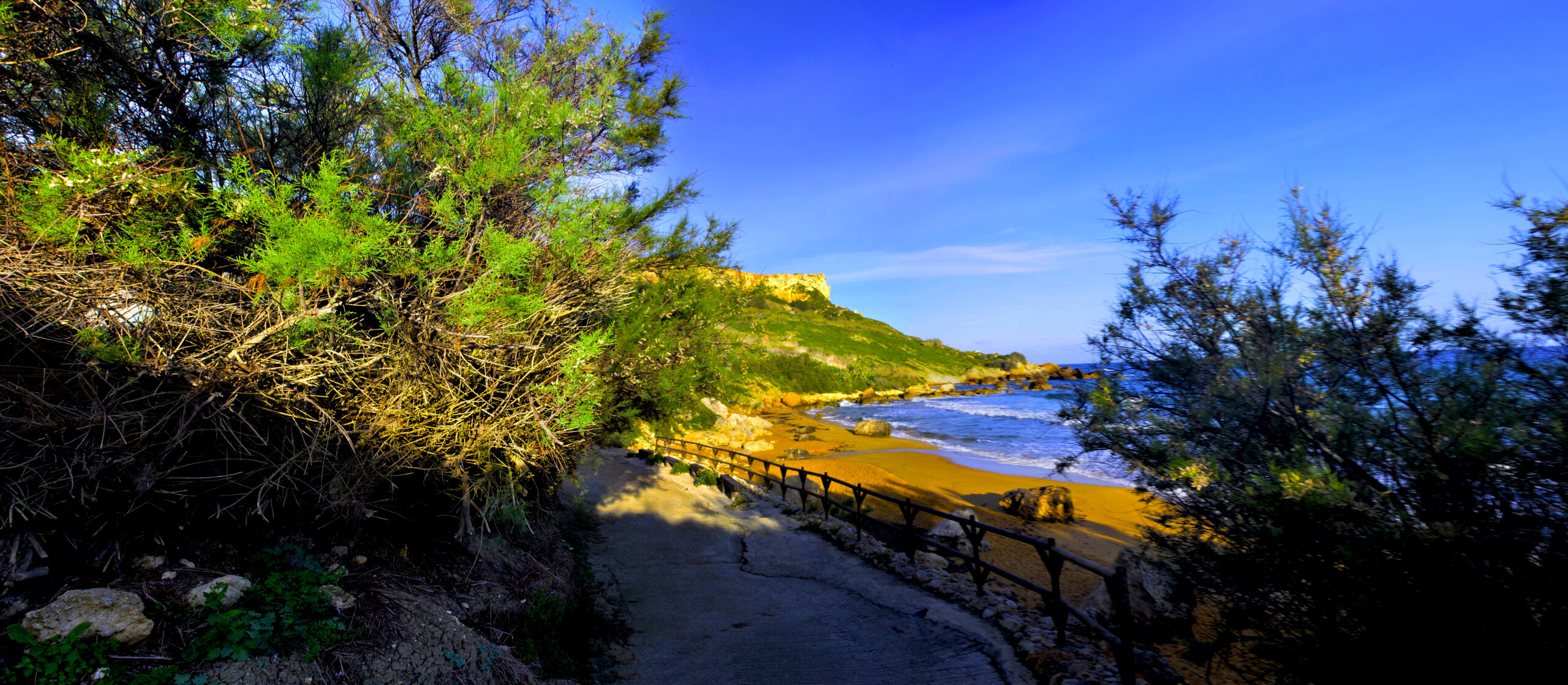
Coastal path to a Gozo beach

What teams get out of it

  • Fixed core hours keep teams reachable
  • Short commute means more usable hours
  • Nature, sea and sport are part of the day, not a weekend trip
  • Quiet evenings support sleep and recovery
  • Time away from the usual setting can reset a tired team

03 · Pros and cons

The honest list: pros and cons

We run a coworking space on Gozo, so we have an interest. This is why we show the downsides too. A team that knows them arrives better prepared.

What speaks for Gozo

  • No time difference to Central Europe
  • EU member, euro, English widely spoken
  • Calm, green, close to the sea, short distances
  • Mild winters, so the off-season is usable
  • Hiking, swimming and diving right outside the door
  • Warm, family-oriented local culture
  • Generally regarded as safe
  • Direct flights to Malta from many European cities, then a short ferry
  • Coworking space with 24/7 access planned for Q1 2027

What you should know

  • Island logistics: you depend on the ferry, and rough weather can disturb it
  • The journey takes longer than to a mainland resort: from the airport expect a transfer plus the ferry
  • Public transport is thinner in the evening and on Sundays, a car or Bolt helps
  • Small town life: limited nightlife, fewer restaurants open off-season, fewer shops
  • Hot, dry summers; older houses can be cold in winter, ask about heating
  • Medical care is good for everyday needs, but some specialist care is on Malta
  • Noise from village feasts, fireworks, church bells and construction
  • Narrow roads, driving on the left, uneven pavements and hills
  • Housing is under pressure, so choose existing quality stays and book early

Gozo fits if you value

Calm and focusNature and the seaCommunity over crowdsSlower eveningsWalkable villages

Think twice if you want

Big-city nightlifeAnonymityFast public transport everywhereLarge international school choiceEvery shop open every day

04 · Guide

What you should know before you come

These are the questions a person asks who plans to stay on a small island for weeks. Timetables, rules and prices change, so please check current information before you book.

Getting there and accessibility

Fly to Malta International Airport, then take a car, taxi or bus to the north of Malta and cross to Gozo by ferry.

  • The Gozo Channel ferry from Ċirkewwa to Mġarr takes about 25 minutes and runs day and night, more often by day
  • A fast ferry from Valletta also serves Gozo, check the current schedule
  • Plan around 1.5 to 2 hours door to door from the airport, depending on transfer and ferry timing
  • Old towns, Cittadella and many streets are hilly with steps and uneven stone; step-free routes exist but are not everywhere
  • If you travel with limited mobility, tell us before you book and we will check the options

To be honest: Bad weather can delay the ferry. Do not book a critical meeting for the hour after you land.

Getting around

Victoria is the public transport hub. You can live well without a car if you stay close to Victoria or the harbour.

  • Public buses connect villages, with fewer services in the evening and on Sundays
  • Bolt and local taxis are quick and easy for short rides
  • A rental car, scooter or e-bike helps to reach remote bays and trails
  • Parking is tight in old centres; Workspace Gozo has no parking of its own
  • Traffic drives on the left, roads are narrow and drivers are assertive

To be honest: First time driving on the left? Rent for a day first or use Bolt in the first week.

Medical services

Gozo has its own general hospital in Victoria with an emergency department, plus health centres, private doctors and pharmacies in the villages.

  • Emergency number: 112
  • EU and EEA visitors usually use their European Health Insurance Card; check what it covers
  • Private doctors and clinics are available and usually paid on the spot
  • Some specialist treatment is done at the main hospital on Malta, reached by ferry or ambulance
  • Bring regular medication in sufficient quantity and carry the prescription

To be honest: For employers: an international health and accident policy with repatriation cover is the safe choice for a stay of weeks.

Safety

Gozo is generally regarded as a safe, quiet island where people know their neighbours. Normal precautions apply.

  • Low everyday risk, but petty theft can happen: lock cars and keep valuables out of sight
  • Sea safety: follow the flags, watch for currents and jellyfish, do not swim alone at remote spots
  • Sun and heat: water, shade and sun protection from late spring to early autumn
  • Coastal cliffs have no barriers in many places: stay on paths and keep children close
  • Roads and scooters are the most common cause of accidents, wear a helmet

To be honest: We do not publish crime statistics because we cannot verify them here. Ask your travel-safety provider for a current assessment.

Walks and hikes

Gozo is small and green, with coastal paths, valleys, salt pans and cliffs that you can reach on foot from many villages.

  • Cliff and coastal walks around Ta’ Ċenċ, Dwejra and Xlendi
  • The salt pans near Xwejni and the red sand of Ramla Bay
  • Short half-day routes fit between work blocks, longer routes suit weekends
  • Best months for walking: autumn to spring; in summer start early
  • Bring sturdy shoes, water and a hat, shade is scarce

To be honest: Trails are often unmarked and rocky. Download an offline map before you set out.

Relaxation and wellbeing

Rest is built into the island: sea, quiet evenings and a slower pace.

  • Swimming in the sea from late spring into autumn, snorkelling and diving all year
  • Gozo is well known for diving, with wrecks, caves and clear water
  • Yoga, spa and massage offers exist, mainly through hotels and small studios
  • Darker skies than on Malta, good for evenings outside
  • Farmhouses with a pool or garden support a real switch-off

To be honest: Wellness choice is smaller than in a large city. If a specific class or therapy matters, ask us first.

Traditions and Mediterranean warmth

Gozo is a village island with a strong Catholic tradition and a warm, direct way of dealing with people. Many guests love it. Some find it loud.

  • Village feasts (festa) in summer bring brass bands, processions and fireworks, sometimes starting early in the morning
  • Church bells ring through the day; Good Friday and other religious processions are a big part of island life
  • Sundays are slower, and some shops close or have shorter hours
  • People greet each other and chat; small talk is part of every errand
  • Long meals, family focus and a relaxed sense of time, sometimes called island time
  • In churches, dress modestly: covered shoulders and knees

To be honest: Some traditions are loud and early, such as fireworks and, in autumn, hunting in the countryside. If you are noise-sensitive, ask for a quiet location and bring earplugs.

Families and children

Gozo is a relaxed place for children: small distances, a lot of outdoors and a family-oriented local culture.

  • Sandy beaches such as Ramla Bay, rock pools and calm bays, always check sea conditions
  • Historic sites like the Ġgantija temples and Cittadella make easy family outings
  • Farmhouses with a garden or pool give children space to play
  • Many locals are warm with children and happy to help
  • Hot summers: plan activities for morning and evening, rest in the midday heat
  • Cobbled, hilly streets and narrow pavements are hard with prams

To be honest: A workcation with children works best when one adult plans the childcare during work hours. Ask your host about babysitting; we do not run childcare.

Education and school

English is an official language and widely used in schools, so children can follow lessons. Options for a stay of weeks are limited.

  • Gozo has state, church and independent schools, taught in Maltese and English
  • Larger international school choice is on Malta, which means a daily ferry commute
  • The University of Malta has a campus on Gozo
  • For stays of a few weeks, most families use school holidays or agree remote lessons with the home school
  • Ask the home school early whether remote learning or a leave of absence is allowed

To be honest: School attendance rules differ by country. Check them before you plan a stay during term time.

Taxes, visa and employment law

This is where companies need to be careful. Working abroad for weeks can touch income tax, social security, employment law and tax residence of the company.

  • Income tax: short stays usually stay taxed in the home country, but each country and each treaty decides; check the day limits
  • Social security: inside the EU, an A1 certificate normally keeps the employee in the home system; ask the insurer
  • Company risk: a permanent establishment or payroll duties in Malta can arise in some set-ups, ask your tax advisor
  • Entry: EU and EEA citizens can stay freely for short periods; longer stays have registration rules
  • Non-EU citizens: check visa rules; Malta offers a residence permit for remote workers, with conditions that change
  • Data and security: GDPR, VPN, device protection and the employer’s accident insurance should cover work abroad

To be honest: General information, not tax or legal advice. Rules depend on the employee’s country, the employer and the length of stay. Confirm with a tax advisor before you approve a workcation.
05 · Locals

Be a good guest: what locals appreciate and what they do not

Gozitans are proud of their island and its own identity. A few habits make the difference between a tolerated visitor and a welcome guest.

What locals appreciate

  • A greeting: “Bonġu” (good morning), “Grazzi” (thank you)
  • Buying from local bakers, farmers, fishmongers and family-run cafés
  • Staying longer and coming back, instead of a quick trip
  • Patience with the slower pace and small talk
  • Respect for churches, processions and village feasts
  • Taking litter with you and caring for cliffs and beaches
  • Saving water: the island depends on desalination
  • Understanding that Gozo is not “Malta’s backyard”, it has its own character

What locals do not like

  • Littering and leaving mess at beaches and viewpoints
  • Loud, drunken behaviour, especially at night in villages
  • Walking through villages in swimwear or topless away from the beach
  • Blocking narrow streets or private driveways when parking
  • Complaining that things are not like at home
  • Driving fast on narrow roads, flying drones over people or feasts
  • Damaging nature: climbing on protected rocks, picking plants, feeding animals
  • Treating residents like staff or a backdrop for photos
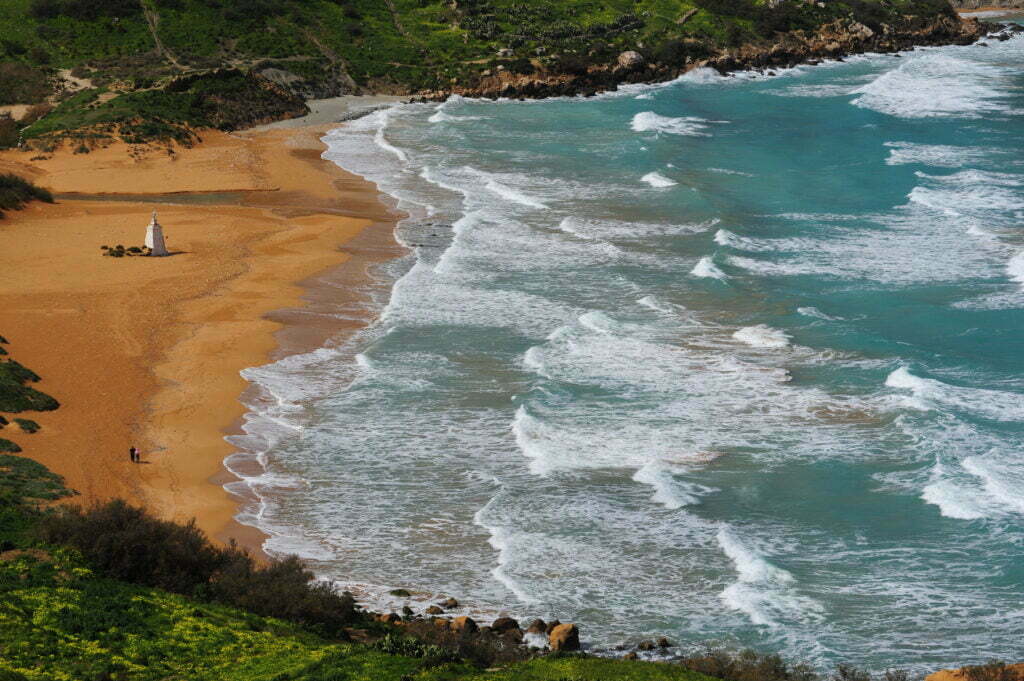
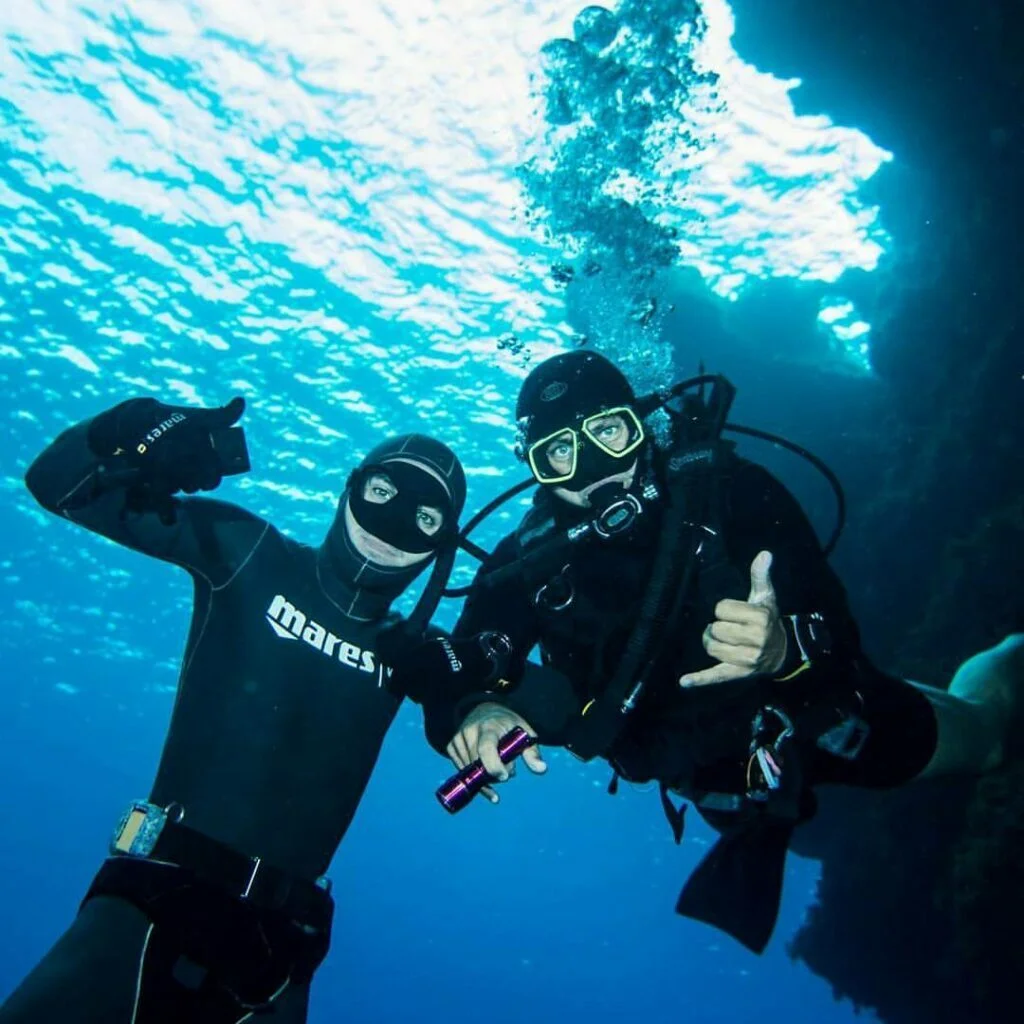
Ramla Bay on Gozo with red sand and the seaCoastal path to a Gozo beachDiving around Gozo

Your impact matters beyond manners. Choose existing quality stays instead of new holiday flats, spend locally and stay longer in the off-season. That is the model we want to see on Gozo.

06 · For companies

Three formats, one contact.

We are based on Gozo and run Workspace Gozo there. We help with desks, stays through island partners and a set-up that fits your policy.

Individual workcation

One person works from Gozo for one to four weeks.

  • Desk at Workspace Gozo, day pass up to monthly
  • Stay in a farmhouse, boutique hotel or apartment
  • Defined core hours and check-ins

Team sprint

A small team spends one to two weeks on a focused project.

  • Teams of 2 to 4 can use the private office, larger groups book hotdesks together
  • Shared stay close to Victoria or the harbour
  • Planning, workshops and evenings together

Retreat or offsite

Leadership or team retreats with a mix of work, nature and local experiences.

  • Tell us size, dates and goals, we help to plan
  • Local producers, guides and venues from the island
  • Best in the off-season, when the island is quieter

A checklist for HR and managers

  • Set a policy: maximum days per year, who may go, who approves
  • Check income tax, social security and permanent-establishment risk with your tax advisor
  • Confirm health, accident and liability insurance for work abroad
  • Agree core hours, availability and meeting rules with the team
  • Secure devices: VPN, disk encryption, no open Wi-Fi for company data
  • Plan the workplace: a coworking desk is more reliable than a kitchen table
  • Check the visa situation for non-EU employees
  • Document the stay: dates, place, purpose

General information, not tax or legal advice. Timetables, entry rules and taxes change and should be checked before booking.

Ready to talk?

Tell us group size, dates and goals. We come back with a first proposal. The coworking space is planned to open in Q1 2027 and the waitlist is open.

FAQ

Frequently asked questions about a workcation on Gozo

Is Gozo good for a workcation?

Yes, if you value calm, nature and focus. Gozo is in the EU, on Central European Time, English is an official language and there is a coworking space planned for Q1 2027. It is not the right place for nightlife or big-city anonymity.

How do I get to Gozo?

Fly to Malta International Airport, travel to Ċirkewwa in the north of Malta and take the Gozo Channel ferry to Mġarr, about 25 minutes. A fast ferry from Valletta also exists. Plan around 1.5 to 2 hours from the airport and check the current timetable.

Do I need a car on Gozo?

Not if you stay close to Victoria or Mġarr Harbour. Buses and Bolt cover most needs. A car, scooter or e-bike helps to reach remote bays. Traffic drives on the left.

What about medical care on Gozo?

Gozo has a general hospital in Victoria with an emergency department, plus health centres, private doctors and pharmacies. Some specialist treatment is on Malta. The emergency number is 112. Take travel health insurance with repatriation cover.

Is Gozo safe?

Gozo is generally regarded as a safe and quiet island. Normal precautions apply, especially for cars, the sea, the sun and cliff paths.

Is Gozo suitable for families with children?

Yes, for stays of weeks, especially in school holidays. Beaches, nature and a family-oriented culture help. Hilly cobbled streets are hard with prams, and for school-age children the home school must agree to remote lessons or leave.

What about taxes if my employees work from Gozo?

It depends on the employee’s country, the length of stay and the company set-up. Income tax, social security (A1 certificate in the EU) and permanent-establishment risk need checking. This page gives general information, not tax advice. Ask your tax advisor.

When is the best time for a workcation on Gozo?

Autumn to spring is mild, quiet and good for walking. Summer is hot and sea-ready but busier. For a team that wants focus and calm, the off-season is usually the better choice.

What do locals not like?

Littering, loud drunken behaviour, swimwear in villages, blocked streets, fast driving and complaints that things are not like at home. A greeting in Maltese, buying local and respect for churches and feasts are very welcome.

Where do my people work on Gozo?

At Workspace Gozo by RevenueWorks, a coworking space in Victoria or close to Mġarr Harbour with 24/7 access, fibre Wi-Fi and call booths, planned to open in Q1 2027. Waitlist and date reservations are open on the Workspace Gozo page.

Can you help plan a team stay?

Yes. Tell us group size, dates and goals by WhatsApp or email. We help with desks, stays through island partners and a plan that fits your policy. We do not give tax or legal advice.